
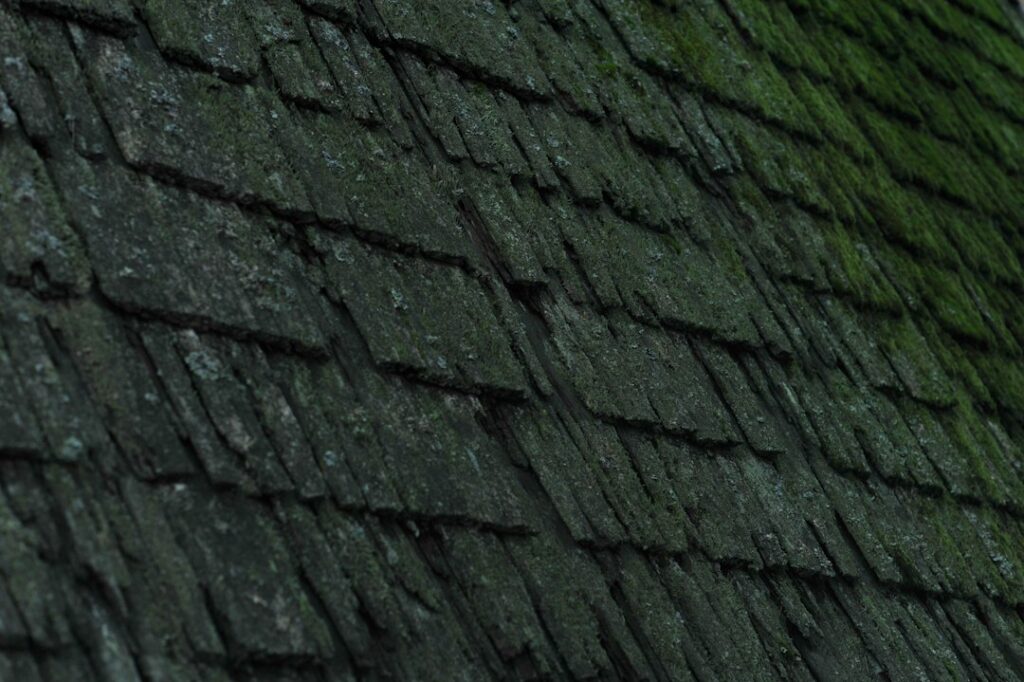
Roof stains are usually a sign that moisture, organic growth, or aging materials are affecting the roof surface. A dark mark does not always mean the roof is failing, but it should be examined before it spreads or hides a more serious problem.
In Latham, seasonal weather can make roof staining more noticeable. Snow, spring rain, summer humidity, falling leaves, and shaded areas all create conditions where algae, moss, mildew, and water-related discoloration may develop.
What causes dark stains on a roof?
The most common cause of dark roof streaks is algae growth. Algae often appears as black, gray, or blue-green discoloration that begins near the upper portion of shingles and gradually extends downward. It is especially common on roof areas that remain damp or receive limited sunlight.
Other causes include:
- Moss growing between or over shingles
- Mildew or organic debris trapped on the roof
- Rust from metal flashing, vents, or fasteners
- Water marks caused by a roof leak
- Shingle granules collecting unevenly after weather exposure
- Stains from nearby trees, branches, or clogged drainage areas
- Smoke, soot, or airborne pollution settling on the roof
Algae stains are often cosmetic at first. Moss deserves more attention because its roots and moisture retention can lift shingle edges, interfere with drainage, and speed up deterioration.
How can you tell whether a stain is algae, moss, or a leak?
A roof stain that forms broad, relatively flat streaks is often algae. Moss usually looks raised, fuzzy, or clumped. A leak-related stain may appear as an isolated patch, a spreading water mark, or a discoloration that follows a roof joint, flashing detail, chimney, vent, or valley.
Look for these clues:
- Flat black or gray streaks: Often algae or accumulated dirt
- Green, thick, or raised growth: More likely moss
- Brown or yellow interior ceiling marks: Possible water intrusion
- Rust-colored streaks below metal components: Possible corrosion or runoff
- Staining near valleys or roof edges: May relate to drainage or flashing problems
- New marks after heavy rain or snow melt: Worth checking for active moisture
The roof surface and the attic should both be inspected. A stain on the roof does not always correspond directly to the location of a ceiling mark because water can travel along rafters, roof decking, insulation, or framing before appearing indoors.
Are roof stains dangerous?
Most surface stains are not an immediate emergency, but they should not automatically be dismissed. Algae may only affect appearance, while moss can retain moisture and weaken the bond between shingles. A leak can damage insulation, wood framing, ceilings, and interior finishes if it continues unnoticed.
More urgent warning signs include:
- Water dripping into the home
- A ceiling stain that grows after precipitation
- Damp insulation or a musty attic odor
- Soft, swollen, or discolored roof decking
- Missing, cracked, curled, or lifted shingles
- Sagging areas on the roof or ceiling
- Large sections of moss or debris blocking drainage
If water is entering the living space, electrical fixtures are near a leak, or the roof is visibly sagging, avoid walking on the roof and address the hazard promptly. Wet roof surfaces are slippery, and damaged decking may not support a person’s weight.
Can roof stains be cleaned safely?
Some minor staining can be treated, but roof cleaning is not the same as pressure washing. High-pressure water can remove protective granules from asphalt shingles, force water beneath shingle tabs, and damage flashing or seals.
Safer cleaning methods generally involve a low-pressure application of an appropriate roof-cleaning solution, followed by time for the growth to loosen and weather away. The exact product and concentration should match the roofing material. Asphalt shingles, metal roofing, wood shakes, and membrane roofs do not all tolerate the same treatment.
A person cleaning from the ground should also avoid spraying upward beneath shingle edges, around vents, or toward attic openings. Runoff can harm plants, stain siding, or enter drainage systems. Protective measures may be needed around foundation plantings and exterior walls.
Roof access adds another concern. Even a roof that looks gently sloped can be hazardous, particularly when damp, frosty, moss-covered, or covered with loose granules. Cleaning from a ladder or roof surface should not be attempted if footing, equipment, or weather conditions are uncertain.
Should bleach or household cleaners be used?
Household cleaners are not automatically safe for roofing. Chlorine bleach, strong detergents, and improvised mixtures can damage vegetation, corrode metal, discolor siding, or affect roofing components. Some cleaning combinations also produce hazardous fumes.

A roof-cleaning solution should be selected according to the roof material and used exactly as directed. Never mix cleaning chemicals. It is also wise to protect shrubs and soil from runoff and to keep children and pets away from treated areas until the surface is fully rinsed and safe.
Cleaning may improve the appearance of shingles, but it will not repair a leak, replace missing materials, correct poor drainage, or restore shingles that have lost structural integrity.
When should a roof stain be inspected more closely?
A stain deserves closer attention if it is new, expanding, associated with interior moisture, or located near a roof penetration. Areas around chimneys, plumbing vents, skylights, dormers, valleys, and wall intersections are common places for water entry because they contain multiple seams and flashing components.
The attic can provide useful evidence. During dry daylight conditions, look for:
- Darkened wood around roof penetrations
- Damp insulation
- Water trails on rafters or decking
- Mold-like growth
- Daylight visible through the roof deck
- Rusted nails or metal components
Do not enter an attic if the floor is difficult to see, insulation is unstable, or electrical hazards may be present. In older homes, stored items and limited access can make attic inspection especially risky.
How can future roof staining be reduced?
Staining cannot always be prevented, but moisture and debris can be managed. Keep gutters and downspouts clear so water does not remain against roof edges or overflow onto siding. Trim branches that continuously shade the roof or drop leaves and small twigs onto it. Improve attic ventilation and insulation where needed so warm, moist air does not contribute to condensation beneath the roof.
Other helpful practices include:
- Removing leaves and organic debris before they accumulate
- Keeping roof valleys and drainage paths clear
- Checking flashing after major storms
- Replacing damaged or missing shingles promptly
- Watching shaded roof sections during spring and fall
- Avoiding pressure washing and abrasive scrubbing
- Keeping gutters securely attached and properly directed
Winter conditions also deserve attention. Ice, snow, and repeated freeze-thaw cycles can expose weaknesses in flashing, drainage, and shingle edges. Stains that appear after snow melt should be compared with attic and ceiling conditions rather than judged by appearance alone.
Does a stained roof need to be replaced?
No. Staining by itself does not prove that replacement is necessary. A roof may remain serviceable after algae is removed, provided the shingles are still well bonded, flexible enough for their age, and free from widespread damage.
Replacement becomes more likely when staining occurs alongside extensive granule loss, curling, cracking, repeated leaks, soft decking, or aging materials throughout the roof. The key question is whether the roof is still protecting the structure, not whether every shingle has a perfectly uniform color.
A careful evaluation should distinguish between a surface problem that can be cleaned, a maintenance issue that can be corrected, and damage that requires repair or broader action.
